We are delighted to present you the keynote speakers for the 2026 PTBI Symposium:
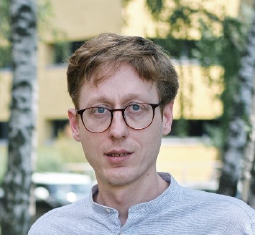
Maciej Chyleński, Ph.D., Institute of Human Biology&Evolution, Adam Mickiewicz University, Poland
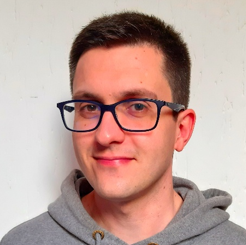
Prof. Sebastian Deorowicz, Department of Algorithmics and Software, Silesian University of Technology, Poland
Prof. Edoardo Pasolli, Department of Agricultural Sciences, University of Naples Federico, Italy
Prof. John Moult, Institute for Bioscience and Biotechnology Research, University of Maryland, Baltimore
Maciej Chyleński, Ph.D., Adam Mickiewicz University, Poland
Maciej Chyleński is an Assistant Professor at the Institute of Human Biology & Evolution, Faculty of Biology, Adam Mickiewicz University in Poznań, Poland. He holds a PhD in archaeology and specializes in archaeogenetics, ancient DNA research, kinship reconstruction, and migration studies in prehistoric populations, with particular focus on Neolithic and Bronze Age communities in Europe and Anatolia. His academic background also includes degrees in archaeology and medical biotechnology.
He has authored and co-authored papers published in leading international journals, including Science, Nature Communications, Current Biology, Science Advances, Nucleic Acids Research, and BMC Evolutionary Biology. He has led several nationally funded research projects and has participated in numerous collaborative grants in bioarchaeology and population genetics. His research experience includes international stays and training in Sweden, Denmark, Turkey, and Japan, and in 2019 he received the prestigious START scholarship from the Foundation for Polish Science.
Title of a talk: How Ancient DNA Is Transforming Our Understanding of the Past
Abstract: The study of ancient DNA (aDNA) has become a well-recognized field of research. Its results, while maintaining immense scientific value, often resonate with audiences beyond the scientific community. This research helps us understand human evolution, mobility, and aspects of the social structure and economy of past societies. By examining changes in population structures and the ranges of various species, it also provides insight into past environments and ecosystem responses to environmental change. In this presentation, I will provide a brief overview of the field, focusing on the specific nature of aDNA, its characteristics, and the resulting limitations of the genomic data that can be obtained. I will also briefly discuss the methodological toolkit that had to be developed to enable research in this area. Finally, I will demonstrate the wide range of research fields that benefit from aDNA studies by presenting several projects in which my team and I have been involved. I will show how aDNA data have helped us understand the social structure and mobility of prehistoric societies, using Anatolian Neolithic and European Bronze and Iron Age populations as examples. I will then briefly discuss our participation in projects tracking changes in Arctic and Antarctic ice sheets over the last centuries, as well as research on the demographic history and genomic erosion of the European bison.
Prof. Sebastian Deorowicz, Silesian University of Technology, Gliwice, Poland
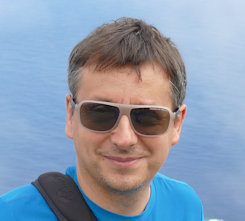
Sebastian Deorowicz obtained his PhD in 2003 and habilitation in 2011, both in Computer Science. Since 2017, he has been a Professor of Technical Sciences. In 2010, Sebastian Deorowicz began working in bioinformatics. He is an author of 100+ papers, including those in Nature Methods and Nature Biotechnology. Several popular bioinformatic tools have been developed in his research group. KMC is often the first choice for people who need robust k-mer counting in sequencing data. FAMSA is frequently used to determine multiple protein sequence alignments. AGC is used for compressed storage of collections of genomes. The group also developed several compressors for sequencing data, like DSRC, CoLoRd. Recently, he also focused on viral genomes and co-developed PHIST for host predictions and Vclust for clustering of viral genomes.
Sebastian Deorowicz actively collaborates with international and Polish-based groups, e.g., from Harvard University, Stanford University, UCLA, CRG Barcelona (Spain), Friedrich Schiller University Jena (Germany), and UAM Poznań.
Title of a talk: Ultrafast and accurate sequence alignment and clustering of viral genomes
Abstract: Viromics produces millions of viral genomes and fragments annually, overwhelming traditional sequence comparison methods. We introduce Vclust, an approach that determines average nucleotide identity by Lempel-Ziv parsing and clusters viral genomes with thresholds endorsed by authoritative viral genomics and taxonomy consortia. Vclust demonstrates superior accuracy and efficiency compared to existing tools, clustering millions of genomes in a few hours on a mid-range workstation.
The talk will describe the tool, which has already been published (A. Zieleziński et al., Nature Methods, 2025), and give a brief look at Vclut extensions we are currently working on.
Prof. Edoardo Pasolli, University of Naples Federico, Italy
Edoardo Pasolli is an Associate Professor in the Department of Agricultural Sciences at the University of Naples Federico II, Italy. His expertise lies in developing and applying computational and machine learning methods for metagenomics, with a particular emphasis on large-scale integrative analyses spanning human and food‑associated microbiomes. His research focuses on strain-level resolution, enabling precise characterization of microbial diversity and transmission across hosts and environments.
Title of a talk: Integrative large-scale metagenomics for strain‑level microbiome analysis
Abstract: Strain-level metagenomics is reshaping the understanding of microbial diversity and dynamics across human hosts and food environments, with significant implications for health, safety, and ecosystem monitoring. This talk presents recent methodological advances and emerging resources that support robust, large-scale, strain-resolved microbiome analysis. Key developments include machine-learning approaches tailored to metagenomic data, alongside the growing integration of foundation models within microbiome research. The session will highlight harmonized reference databases, standardized metadata frameworks, and end-to-end pipelines that encompass both read-based strain profiling and metagenomic assembly with genome-resolved reconstruction. Particular emphasis is placed on initiatives aimed at detecting, annotating, and comparing under-studied microbial species and strains across studies. Examples linking human and food microbiomes will illustrate shared microbial reservoirs, opportunities for strain tracking, and diet-associated microbial flows. The talk concludes by outlining open challenges and priorities for establishing standardized, scalable, and generalizable frameworks within a One Health context.
Prof. John Moult, Institute for Bioscience and Biotechnology Research, University of Maryland, Baltimore
Research in Dr. John Moult’s laboratory is focused on computational modeling of biological systems, including:
Investigating the effects of missense single nucleotide variants on protein structure and function to elucidate their role in human disease. Integrating knowledge of the biological mechanisms underlying the relationship between human genetic variation and disease, particularly complex trait diseases such as Alzheimer’s, diabetes, and Crohn’s disease. Using novel neural network architectures derived from deep biological knowledge to probe aspects of disease mechanism, including the evaluation of potential drug targets and the best choice of drug for any patient, given their genome sequence. Conducting large-scale community experiments to assess and advance the state of the art in areas of computational biology, particularly genome interpretation and protein structure modeling.
Current research:
Missense Single Nucleotide Variants and Disease
Integrating Knowledge of Disease Mechanism
Novel Neural Network Architectures for Studying Disease Mechanism
Community Experiments to Advance Computational Biology